Crazy Time Live Casino Game Show in the UK
 Available in GB
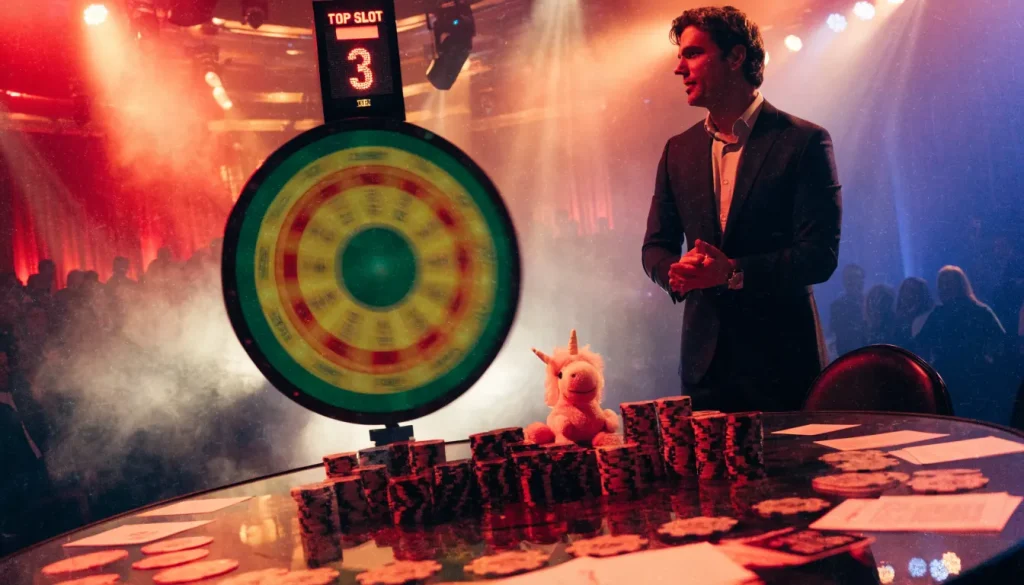
A human-run studio streams the game in real time, while players place bets through an on-screen interface.
Table of Contents
- How Crazy Time Fits the Online Casino
- The Live Show Behind the Casino Search
- Why Casino Sites and Slots Are Not the Same Question
- Where the UK Live-Casino Boundary Sits
- What “Best” Can Mean Without a Brand List
- Strategy, House Edges, and the Limits of Control
- A “Top” Search Without a Verifiable Top List
- Free Play, and What It Does Not Promise
- GamStop Searches and the UK Licensing Question
- Bonuses, Live Tables, and the Small Print
- Casino Games
How Crazy Time Fits the Online Casino
The phrase “Crazy Time online casino” joins two ideas that belong to different levels of description. One names a game; the other describes the setting in which gambling takes place. The distinction matters because the word online can suggest that every game is made and played in the same way. A live-dealer game, however, brings a human-run studio into a digital environment. The screen is not merely displaying a sequence generated for a player; it is carrying a real-time game, while bets are entered through an on-screen interface.
That arrangement sits between older casino ritual and ordinary screen-based play. A dealer works in a studio, and the game is streamed as it happens. Players do not place chips across a physical table, but they use the interface to make bets. The room and the point of contact are different; the division of roles is recognisable. A person conducts the game, while software connects that activity to people watching and participating remotely.
This is a useful way to understand the online-casino part of a search for Crazy Time, without assuming that every familiar feature of a live table applies to that particular game. The broad category says something about how a live-dealer format works. It does not, by itself, settle the rules, pace, presentation or betting options of any named game. Those details belong to the game’s own description, not to the category label.
Crash casino games in the UK: licensing and play
A conventional digital game makes no equivalent promise of a human dealer in a studio. The contrast is not simply between “real” and “fake”: both formats are experienced through software, and both depend on a screen. The more precise distinction is about what the screen carries. In a live-dealer format, it streams gameplay taking place in real time, with a human dealer at its centre. In a digital version, the play is presented through the game’s digital format rather than a studio stream. That difference changes the texture of the experience even before any individual game rules come into view.
There is a small social history in that design. Casinos have long organised games around a visible host, a shared table and a sequence of turns. Online access removes the need to be in the same room, but a live stream preserves the dealer as a focal point. The interface translates the player’s action into a bet; the stream lets the player follow the game as it unfolds. The room has become remote, though the dealer remains in view. Distance, carefully staged.
Time is one of the clearest practical differences. Live games move more slowly than digital versions. A human-run sequence has its own rhythm, and the stream gives events room to happen in front of the participants rather than presenting only a digital sequence. That slower pace is not automatically a virtue or a drawback. It is a feature of the format, and it affects how a session feels. Anyone comparing a live-dealer option with a conventional digital game is comparing not only presentation but also tempo.
Live Dream Catcher Casino UK: How It Works
The financial entry point can differ too. Live games have higher minimum bets than digital versions. That fact is best understood as a broad feature of the format, not as a price tag for every table or a promise about the minimum attached to Crazy Time. The relevant terms depend on the game and the table being offered. The general comparison still matters: the live experience may ask for a higher starting stake than its digital counterpart, so format and budget cannot be treated as separate questions.
There is also a technical condition that the studio format cannot avoid. A live game requires a stable internet connection, because the experience depends on a stream arriving in real time. If that connection falters, the player’s view of the game can be interrupted. This is not an ornamental detail. The live element exists through the connection, and the quality of that connection helps determine whether the format can be followed as intended.
For someone looking at Crazy Time in an online casino, then, the first distinction is categorical rather than promotional. “Online casino” identifies a digital place to participate; “live dealer” identifies a format in which a human dealer conducts gameplay from a studio and bets are placed through an interface. The former does not prove the latter for any particular game. The name alone cannot do that work.
Live-Dealer Format
- Combines a studio stream and a human dealer with remote betting
- Features a slower rhythm compared to digital versions
- Typically has higher minimum stakes than digital games
- Requires a stable internet connection for real-time gameplay
That restraint leaves a clearer picture, not a thinner one. A live-dealer casino format combines a studio stream, a human dealer, remote betting, a slower rhythm, higher minimums than digital versions and a need for reliable internet. Whether those characteristics describe a specific Crazy Time offering has to be established from its own presentation. The category provides context. It is not a rulebook.
The Live Show Behind the Casino Search
The word “casino” carries more weight than a game label. In the United Kingdom, it points not only to a kind of entertainment but also to a regulated activity: live-dealer casinos are legal when they hold a licence from the UK Gambling Commission. That condition matters whether a title is presented as a live show, a table game or something with a more theatrical name. The format may attract attention; the licence determines whether the operator may offer it legally to people in the UK.
A live casino brings a studio into the frame. A human dealer conducts a game, with the action streamed in real time and bets placed through an on-screen interface. The arrangement borrows the visible rituals of a casino floor—the person dealing, the unfolding action—and joins them to the private screen. It is neither simply a filmed performance nor a conventional game running entirely through software. Its appeal rests partly on that mixture: the dealer is present on screen, while the player’s participation remains mediated by a device.
Deal or No Deal Casino UK: How the Game Works
That distinction helps explain why a phrase such as “Crazy Time live casino” can be read in more than one way. It may point to interest in a named entertainment format, or to the kind of UK gambling service through which a live game is encountered. Those ideas are related, but they are not interchangeable. A casino is the regulated setting; a particular title is an individual offering within, or associated with, that setting. The word “live” describes a broad mode of presentation, not a complete account of every game bearing the label.
The title itself does not settle the details. Calling something a live casino game show does not establish its rules, how a round proceeds, what choices are available, or which features appear on screen. Those particulars need a reliable description of the specific game. Without that, it is more accurate to separate the familiar category from the unknown particulars than to let the language of a show fill in the gaps. A vivid name is not a rulebook.
The distinction is useful because casino language can sound more precise than it is. “Crazy Time casino UK” might be understood as a request for the game, the casino service, or a lawful route to access it. But a name or search phrase cannot certify an operator’s standing. In the UK market, the relevant condition is that a live-dealer casino holds a UK Gambling Commission licence. That is a condition on the service, not a feature of the game’s presentation.
Licensing is less theatrical than a studio set, but it is the part of the arrangement that places a legal boundary around the performance. A stream may look polished and a dealer may appear on screen; neither appearance answers whether the service is authorised for the UK market. Nor does the use of “UK” in a page title or product description prove that the operator holds the required licence. The legal test belongs to the operator offering the gambling, not to the advertising language surrounding a title.
UK Licensing
In the United Kingdom, live-dealer casinos are legal only when they hold a licence from the UK Gambling Commission.
There is a small social history in the attraction of the live format. Casinos have long made procedure visible: the dealer’s gestures and the shared attention around a table turn a transaction into a scene. Online, that scene is carried across a screen, and the studio supplies a sense of occasion without making the home into a casino floor. The interface still handles participation. The spectacle and the regulated service coexist, but they answer different questions.
For anyone trying to understand what “casino” means in this context, the order is straightforward: the label describes a setting, while the UK licence condition describes the legal status of the operator. A particular game’s rules and features require separate, specific information; they cannot be inferred from “live”, “show” or “casino” alone. The distinction is modest, but important. Glamour is not evidence.
Why Casino Sites and Slots Are Not the Same Question
A casino site is a place in the broad, digital sense: an online service that offers gambling. A slot is a type of game that may appear within such a service. The terms sit at different levels. Confusing them can make a search for Crazy Time appear to ask about a particular kind of game when it may instead be asking where a named game can be found.
That distinction matters because a casino’s catalogue is not a single category. The word “casino” can refer to the operator’s whole offering, while “slots” identifies one family within it. A person looking for a Crazy Time casino site may be interested in the site as a destination; someone looking for a slot is asking about game classification. Those are related questions, not interchangeable ones.
The name alone does not settle the classification. Nor does the fact that a casino site might offer slots establish that every game on that site is a slot. Treating the terms as synonyms would turn a broad search for an online casino setting into a specific claim about the game itself. That claim needs evidence of its own.
Casino Dice Games in the UK: How They Work
The distinction is especially useful when the same wording is joined to “best”. “Best casino sites” could mean a comparison of operators, while “best slots” would point towards a comparison of games. Without a defined basis for either judgement, the adjective supplies no measure: it may refer to selection, conditions, interface or something else entirely. A broad label cannot do the work of a criterion.
The same care applies to bonuses. A casino bonus belongs to the operator’s terms and offer structure; it does not, by itself, tell anything about the category of a game. An offer described in relation to slots cannot automatically be assumed to apply to every casino game. The game label and the promotion’s eligibility rules are separate pieces of information. Their proximity in a menu or advertisement does not make them equivalent.
“Scores” introduces another ambiguity. In ordinary use it might mean a game result, a record, a rating or a comparison. Without a clearly identified scoring system, the word does not establish that a game has a score in a particular sense, still less that one can be used to assess future outcomes. A phrase such as “live casino scores” may sound precise while leaving the object being measured unclear.
That is a familiar feature of digital language: one word can point to the service, another to the product, and a third to an evaluation, all compressed into a short phrase. The compression is convenient for typing and poor at preserving distinctions. In this case, “casino”, “slot”, “bonus” and “score” each raise a different question. None answers the others.
For Crazy Time, careful wording means keeping those questions apart. A search for a casino site concerns an operator’s wider service; a search for slots concerns a game category; a search for bonuses concerns terms attached to an offer; and a search for scores needs a defined meaning before it can be assessed. The words may gather around one name, but that does not make them evidence of the same thing.
Category first. Claims second.
Where the UK Live-Casino Boundary Sits
For anyone looking to play Crazy Time live in the UK, the first boundary is not a postcode or a studio location. It is the operator’s regulatory status. A live-dealer casino may legally serve the UK market only if it holds a licence from the UK Gambling Commission. The relevant question is therefore whether the casino offering a game is licensed to serve people here, not whether its servers or studios are based in Britain.
Mines Casino Game in the UK: Rules and Risks
That distinction matters because online gambling crosses borders more easily than the rules governing it. An operator can be located elsewhere and still fall within the UK licensing requirement when it sells remote gambling to British customers. A foreign address is not, by itself, a substitute for permission to operate in this market. Nor does a polished website or a familiar game title settle the matter.
The Gambling Act 2005 gives the wider British framework for gambling in England, Wales and Scotland. Within that framework, a casino is defined by the opportunity it gives people to take part in casino games; the label is not simply a matter of what an operator calls its website. Northern Ireland has a different position under that Act, so “UK” should not be treated as a single, unvarying legal shorthand in every context. The central point for a UK live-casino search remains the licensing condition: legal live-dealer casinos must hold the UK Gambling Commission licence.
That condition is about market access, not a guarantee of quality, entertainment or a particular game’s presence. A licensed casino may offer one range of games and another may offer a different range. The words “Crazy Time” on a page, in an advert or in a search result do not alone establish that the game is available there, or that the operator is authorised to offer it to UK customers. Those are separate matters.
This is why “where to play” cannot responsibly be answered with a list of names on the basis of a game title alone. The useful dividing line is whether the casino is licensed for the market it serves. A claim that a site is international, popular or easy to access does not change that condition. A licence is the legal threshold, not a decorative seal.
The phrase “UK casino” can make geography sound decisive, as though the country of a company’s headquarters were the whole story. Remote gambling regulation is less picturesque: it follows the service into the market where customers are served. The operator’s location may be abroad; the obligation to hold the relevant UK licence remains.
Regulatory Warning
An operator’s location abroad does not exempt them from the obligation to hold a relevant UK licence to legally serve British customers.
That is the boundary. Plain, but consequential.
This article is for entertainment purposes only and is not gambling advice.
What “Best” Can Mean Without a Brand List
“Best” is a judgement about fit, not a property that can be read from a casino’s name. For a UK player considering a live-casino listing, the practical questions are more modest: whether the pace suits the setting, whether the table’s minimum is affordable, whether the connection can sustain a live stream, and whether the operator holds the required licence. None of these turns a game into a dependable source of results.
Live games move more slowly than digital versions because play unfolds through a real-time stream rather than an entirely digital sequence. That difference can be part of their appeal: the pace leaves room to watch events develop. It can also make a session feel less brisk. A preference for one tempo over another is not a measure of quality, and it says nothing about what any particular round will produce.
Minimum stakes deserve the same plain attention. One specialist review reported that many live roulette and baccarat tables started at around 20p, while blackjack tables often had higher starting limits. That is a report about certain tables, not a settled price list for the market. Limits can differ between games and operators, so a figure encountered elsewhere should not be assumed to apply to every table, or to a Crazy Time listing.
The live stream also depends on a stable internet connection. A delayed or interrupted feed can make the experience harder to follow, while the slower pace offers little compensation for a connection that keeps breaking. This is a basic condition of live play, not a special feature or a promise of uninterrupted service.
Chicken Road Casino Game in the UK: What Is Known
Licensing is not a decorative badge in the UK context. A live-dealer casino serving the British market must hold a UK Gambling Commission licence. That condition separates lawful market access from mere availability online; an attractive presentation cannot substitute for it. The licence does not certify that a game is suitable for every player, or that its results will favour anyone.
The phrase “best Crazy Time casino” can therefore be treated as a request for standards rather than a trophy table. Pace, visible table limits, connection requirements and licensing are concrete points for comparison. Claims about a special strategy or favourable results belong to a different question: no choice of venue can make an outcome certain. The machinery of chance remains stubbornly unimpressed by adjectives.
This text is for entertainment purposes only and is not gambling advice.
Strategy, House Edges, and the Limits of Control
Casino strategy often borrows the language of mathematics: edge, probability, pattern, system. The vocabulary can make chance sound governable. In live games, the useful distinction is narrower. Rules determine what a bet means; they do not turn a staking method into a guarantee.
Roulette makes the house margin visible in the bet itself. A straight-up bet carries a 2.9% house edge, while other bets carry a 2.7% edge. These figures describe the game’s built-in advantage over time, not the outcome of any particular spin. A winning number can arrive immediately; a run of losses can arrive just as readily. Neither changes the underlying edge.
House Edge Examples
- Straight-up bets in roulette carry a 2.9% house edge.
- Other roulette bets carry a 2.7% edge.
- These figures describe the built-in advantage over time, not the outcome of any single spin.
French Roulette softens one specific result for even-money bets: when the ball lands on zero, only half the stake is lost. That rule changes the treatment of zero on that bet. It does not remove the house advantage or make a sequence of previous outcomes a guide to the next spin.
Blackjack strategy is often discussed differently because players make decisions against the dealer’s hand. The aim is to finish with a total of 21 or less that beats the dealer without going over. Yet blackjack still retains a house edge. A staking system such as Martingale, which increases stakes after losses, cannot erase it and can still lead to losses. Changing the size of a bet is not the same as changing the rules.
That distinction matters when considering a Crazy Time casino strategy. Roulette and blackjack mechanics cannot be carried across as if every live game were a variation on the same table. Without establishing the rules of Crazy Time, claims about a winning method would be guesswork dressed as expertise. Casino history may explain how games and customs developed, but history alone does not establish a way to predict an outcome.
Tracking results has the same limitation. A record can describe what has already happened; it cannot make past results or tracker patterns influence future spins or Lightning Numbers. The appearance of a streak may invite a story about what must happen next. The story is not a mechanism.
For players, the practical value of strategy claims is therefore modest: understand the rules and the house margin where those are known, and treat staking systems as choices about exposure rather than tools for control. A familiar name such as Martingale can sound reassuringly systematic. The losses remain possible. The mathematics is less theatrical than the promise.
A “Top” Search Without a Verifiable Top List
When looking for a Crazy Time live casino option in the UK in 2026, payout speed is one practical detail to consider alongside the game itself. This list gives a concise reference point for the payout information available for each operator.
1. EvoSpin
Payout speed: 1-3 business days
EvoSpin has a stated payout speed of 1–3 business days. This gives readers a clear timeframe to consider when assessing the operator.
2. x3bet
Payout speed: 1-3 business days
x3bet lists a payout speed of 1–3 business days. That timeframe is the available practical detail for readers to weigh.
3. Britsino
Payout speed: 1-3 business days
Britsino has a stated payout speed of 1–3 business days. Readers can use this as one point of reference when considering the operator.
4. WinBeast
Payout speed: 1-3 business days
WinBeast lists payouts as taking 1–3 business days. This provides a specific timeframe to factor into a decision.
5. Revery Play
Payout speed: 1-3 business days
Revery Play has a stated payout speed of 1–3 business days. This is the available information to consider about its payouts.
6. SpinFormula
Payout speed: 1-3 business days
SpinFormula lists a payout speed of 1–3 business days. That gives readers a clear timeframe to keep in mind.
7. SlotoSport
Payout speed: 1-3 business days
SlotoSport has a stated payout speed of 1–3 business days. This timeframe is a useful point of reference when considering the operator.
8. NightWin
Payout speed: 1-3 business days
NightWin lists payouts as taking 1–3 business days. This is the available detail about its payout speed.
9. Dieselwin
Payout speed: 1-3 business days
Dieselwin has a stated payout speed of 1–3 business days. Readers can factor that timeframe into their assessment.
10. BeOnBet
Payout speed: 1-3 business days
BeOnBet lists a payout speed of 1–3 business days. This provides a clear payout timeframe for readers to consider.
A ranking promises comparison. It implies that several games or casinos have been examined against the same measures, and that the order means something beyond the arrangement of a page. Without identifiable entries and evidence for comparing them, a “top” list is not a ranking at all. It is a heading wearing the clothes of a conclusion.
That distinction matters for a request to find a leading UK casino for Crazy Time, or the best place to encounter a game with that name. A list of operators would need to establish what is being compared and why: not merely repeat praise, but show that each entry is relevant to the same question. Naming casinos without that basis would turn a reader’s wish for orientation into an unsupported recommendation. No names, no ranking.
The same restraint applies to the phrase “top slot”. A label in a search phrase does not establish that Crazy Time belongs to the slot category. Nor does the word “top” supply a measurable attribute by itself. A responsible description cannot quietly convert a live-casino search into a list of slots, or suggest that one game outranks another without a defined comparison. Labels are easy. The underlying distinctions are less obedient.
“Tips” raises a different expectation: practical guidance specific to the game. General observations about casino play cannot be passed off as Crazy Time tactics. Familiar strategy language may sound reassuring, but it does not prove that a system can control a game’s outcome. Advice without confirmed rules or mechanics would be confidence assembled from air. A poor foundation.
JetX Casino Game in the UK: What to Know
This is not a claim that rankings or game advice are impossible in principle. It is a limit on what a ranking can honestly say. A useful comparison needs verifiable entries, a clear basis for ordering them and information that applies to the subject being compared. A useful tip needs a confirmed mechanic to act on. Where those elements are absent, a confident tone does not fill the gap.
The word “demo” carries yet another promise. It suggests a version available for practice or exploration, but the label alone cannot establish what such a version contains, whether it follows the same rules as real-money play, or whether any result has a cash value. Those are separate questions, not details to be smuggled into a promotional description. Free play has its own limits.
There is a social habit behind the demand for a top choice: abundance is made easier to bear by sorting it. Yet sorting only helps when the categories and evidence hold together. In casino writing, a neat numbered list can look more certain than the underlying information allows. Sometimes the honest answer is less ornamental: a list cannot be verified, so it should not be invented.
Free Play, and What It Does Not Promise
“Free play” sounds simple, but the phrase can describe different things: a game made available without a cash stake, a demonstration using play-money credits, or promotional spins attached to an offer. Those arrangements are not interchangeable. The label alone does not establish what is provided, whether access is unrestricted, or whether anything can be withdrawn.
For anyone looking for a free way to try Crazy Time, the important distinction is between experiencing a game without risking money and participating for real-money returns. Play-money activity, where offered, is not a route to cash winnings. A display of credits or a sequence of spins does not turn a demonstration into a payout opportunity. That is the limit of the promise.
Aviator Casino Game UK: Rules and Licensing
Nor does “free spins” necessarily mean free access to a live game. Spins are language associated with particular promotional formats; their presence in an offer says nothing by itself about whether they apply to a live casino game. The terms attached to an offer determine which games qualify and how any promotion works. A generous-sounding label is not the terms.
Reviews can help explain what a site or promotion claims to provide, but a review is not a substitute for those conditions. A free-play description should make clear whether it concerns a demonstration, a bonus, or another arrangement. Where that distinction is absent, the word “free” carries more implication than information.
There is a social history tucked into the word. Gambling has long borrowed the language of entertainment and spectacle, while the boundary between watching and staking money remains commercially useful. Free access can lower the threshold for curiosity; it does not remove the difference between a game played for amusement and one involving a deposit, a wager and possible loss. The distinction is plain. The marketing often is not.
For a UK audience, any move from no-stake play to real-money gambling changes the nature of the activity. Online gambling is legal for adults at sites holding the relevant UK Gambling Commission licence. That does not make a free demonstration a preview of cash results, nor does it make a promotional spin equivalent to a real-money wager. Entertainment is the sensible frame; free play is not a promise of winnings.
Attention: A free-play demonstration is not a route to cash winnings and does not guarantee the same results as real-money play.
GamStop Searches and the UK Licensing Question
“Not on GamStop” describes a relationship with a self-exclusion scheme; it does not, by itself, establish whether a casino is authorised to serve customers in Britain or whether it offers Crazy Time. The wording can make those separate questions look like one. They are not.
For live-dealer casinos serving the UK market, the key legal condition is a licence from the UK Gambling Commission. A label suggesting that an operator is outside GamStop does not replace that requirement, and it is not evidence of a licence. Nor does it confirm that a particular live game is available. A game’s name in an advert or page title is not a substitute for checking who operates the site and what it is licensed to offer.
That distinction matters especially when someone has chosen self-exclusion. Looking for a casino described as “not on GamStop” may amount to searching for a way around a barrier set to prevent gambling. It should not be treated as a harmless technical workaround, or as an endorsement of an operator’s safety or legal standing. A responsible account of Crazy Time availability cannot turn that phrase into a recommendation.
The same caution applies to references to an Evolution casino. A provider name attached to a search for Crazy Time does not establish that a specific UK-facing operator carries the game, nor does it settle the operator’s licensing position. Names and labels travel easily; regulatory responsibility does not.
For anyone affected by gambling-related harm, self-exclusion is a protective measure, not an inconvenience to route around. GamCare, BeGambleAware and Gamblers Anonymous offer support in the UK. Those seeking help can consult their services directly rather than relying on promotional claims about access.
The practical reading is narrow: “not on GamStop” is a description that needs scrutiny, not proof of lawful UK access or a verified route to a named game. In Britain, the live-casino licensing condition remains the relevant boundary. This content is for entertainment purposes only and is not gambling advice.
Online Bingo UK: Tickets, Rooms and Slot Games
Bonuses, Live Tables, and the Small Print
A bonus advertised beside a live game does not necessarily make the game eligible for the offer. A specialist review of UK welcome promotions describes many as free spins tied to slots, rather than funds that can be used at live tables. That distinction matters for a Crazy Time casino welcome bonus: a promotion’s presence on a casino site does not establish that the live game qualifies.
The terms decide. They may exclude live games altogether, or allow them while assigning their stakes only a limited share of progress towards wagering requirements. One stated example gives live games a 10% weighting. That is an illustration, not a universal rate; the relevant figure and eligible games depend on the offer’s own rules.
A deposit bonus can therefore be less useful for live play than its headline suggests. The bonus balance may be available, yet qualifying activity could count slowly or not at all. The same caution applies to a no-deposit offer: its label does not establish that it can be used on a particular live table, and it says nothing by itself about cash-out conditions. Bonus eligibility and eventual payouts are separate questions.
The small print can also set a maximum bet while bonus funds are active, alongside wagering requirements and game-weighting rules. Those conditions shape how an offer works in practice; a large headline figure cannot answer them. A bonus is a contract with conditions, not extra winnings.
For a Crazy Time casino bonus in the UK, the useful distinction is between an offer that names live games as eligible and one that merely appears on the same site. Terms should be read before opting in, with wagering requirements, weighting and maximum bets checked together. A budget set in advance helps keep promotional play within bounds. This is entertainment, not gambling advice.
Is the house edge the same at online live-dealer casinos?
No. In roulette, straight-up bets have a 2.9% house edge, while other bets have a 2.7% edge.
How does the house edge change between games?
In roulette, it varies by bet: straight-up bets have a 2.9% house edge and other bets have a 2.7% edge. French Roulette also reduces the loss on an even-money bet to half when the ball lands on zero.
How do you choose a live-dealer casino?
Choose a UK operator that holds a UK Gambling Commission licence. Check the table’s minimum bet and make sure your internet connection is stable enough for live streaming.
What are the different types of roulette you can play with a live dealer?
Live roulette includes European, American and French versions. American Roulette has both 0 and 00, while European Roulette has a single 0; in French Roulette, an even-money bet loses only half on zero.
Casino Games

Aviator Casino Game UK: Rules and Licensing
The guide separates UKGC-licensed operators from offshore sites and explains what game, bonus and payment...

3-Reel Slots in the UK: Format and Play
Three-reel games use a compact layout whose symbols, pace and features shape the experience of...

Five-Reel Slots in the UK: How They Work
A practical look at screen layout, demo play, bonus timing and the limits of what...

Bonus Buy Slots in the UK: How They Work
A guide to in-game bonus access, slot variance, demo play and the UK rules that...
UK casino fast payouts: keno awards vs withdrawals
A game’s paytable explains awards for qualifying results, but it cannot show how quickly a...

First Deposit Casino Bonuses in the UK: Key Terms
The offer sits within a regulated account, where deposits, identity checks and bonus conditions shape...

High-Volatility Slots in the UK: How They Work
High volatility means wins tend to be less frequent and larger, but it cannot predict...

Online Keno Casinos in the UK: Games and Rules
Keno combines selected numbers with a random draw, while the paytable determines how matching picks...

Live Casino UK: Tables, Games and Offers
A practical guide to live-dealer formats, blackjack decisions, lobby design and the terms attached to...

Low-Volatility Slots in the UK: How They Work
Low volatility describes how returns are distributed across play, not a guarantee of frequent wins...

Best Online Slots Payout Percentages: What RTP Means
A payout percentage describes an average over play, not a guaranteed result for an individual...

Progressive Jackpot Slots: How the Prizes Grow
Wager contributions feed progressive pools, while ordinary slot payouts follow a separate path and jackpots...

RTP Casino Slots UK: Understanding Long-Run Returns
RTP combines a game's probabilities and payouts into a long-run measure, while individual results can...

Highest RTP Slots in the UK: Understanding the Figures
RTP describes a theoretical return across a very large volume of play, not the result...

Video Slots in the UK: Features, Play and Bonuses
A clear guide to reel formats, game features, browser and mobile play, bonuses, and the...

Casino Dice Games in the UK: How They Work
Dice-themed casino play is a wager on chance, where the visible roll does not reveal...

Chicken Road Casino Game in the UK: What Is Known
A look at how casino games, demo and cash play, bonuses and UK casino offers...

Classic slots online in the UK: free-play guide
Free demos make it possible to explore reel layouts, symbols, controls and features without placing...

Crash casino games in the UK: licensing and play
Crash games may be available to UK players without the casino being part of the...

Deal or No Deal Casino UK: How the Game Works
The casino adaptation follows a game-led route into a decision stage, unlike the contestant-led television...

Fast Payout Online Casinos UK: How Speed Is Measured
A withdrawal can involve a request, casino review and separate payment transfer, so a single...
French Roulette Online Casinos in the UK
La Partage, En Prison, wheel formats and wager terms shape how French roulette differs at...

Fruit Machine Slots in the UK: How They Work
A guide to UK fruit slots, from familiar symbols and game mechanics to free demos,...

Hi-Lo Casino UK: Rules, Payouts and Card Play
Hi-Lo rules vary by game, from tie treatment and pay tables to whether a wrong...

JetX Casino Game in the UK: What to Know
A guide to JetX’s slot label, demo limits, bonus terms, UK licensing context and the...

Live Casino Lightning Roulette UK: Wheel and Odds
A clear look at how wheel layouts, the zero and online play shape the experience...

Live Baccarat Online Casinos in the UK
Live baccarat combines a human-dealt game streamed from a studio with an interface for placing...

Live Blackjack Online Casinos in the UK: What to Know
See how the dealer, physical deck, table rules and bonus terms shape the experience—and why...

Live Dream Catcher Casino UK: How It Works
A look at the live studio, betting controls, physical wheel and practical limits of playing...

Live Roulette UK with English-Speaking Dealers
A clear guide to the streamed physical wheel, digital betting controls, roulette bets, odds and...

Mines Casino Game in the UK: Rules and Risks
A guide to Mines’ place in online gambling, the limits of demo play and the...
Monopoly Live casino in the UK: format and play
The branded game combines a studio stream with software-driven betting, so its rules, connection quality...

Online Bingo UK: Tickets, Rooms and Slot Games
Learn how ticket formats shape wins, how bingo differs from slots, and what to consider...
Online American Roulette in the UK: The Extra Zero
American roulette’s single zero and double-zero shape the possible outcomes, while the table format and...
European Roulette Online in the UK: Rules and Odds
A clear guide to the single-zero wheel, bet types, payouts and the differences between RNG...

Online Casino Games for Real Cash in the UK
A practical look at how line selection changes spin costs and how casino rules affect...

Online Casino Tournaments UK: Free Entry Explained
A freeroll removes the tournament admission charge; tickets and buy-ins describe other ways an event...

Online Casinos Without ID in the UK: What to Know
A “no ID” sign-up claim does not remove the identity checks required of UK-licensed casino...

Penny Slots in the UK: Stakes, RTP and Free Play
Explore how minimum stakes, paylines, RTP and bonus terms shape the experience of playing penny...

Plinko Casino UK: Licensing, Free Play and Payments
The guide separates UKGC-regulated casinos from offshore platforms and explains how free play, bonuses and...

Progressive Slots Online in the UK: How Jackpots Work
A practical explanation of shared prize pools, jackpot triggers, odds, free-play terms and the protections...

UK Casino Sites and Online Slots: What to Check
A practical comparison of game information, returns, bonuses, access and the rules surrounding real-money slot...