
UK Casino Sites That Accept Debit Cards
 Available in GB
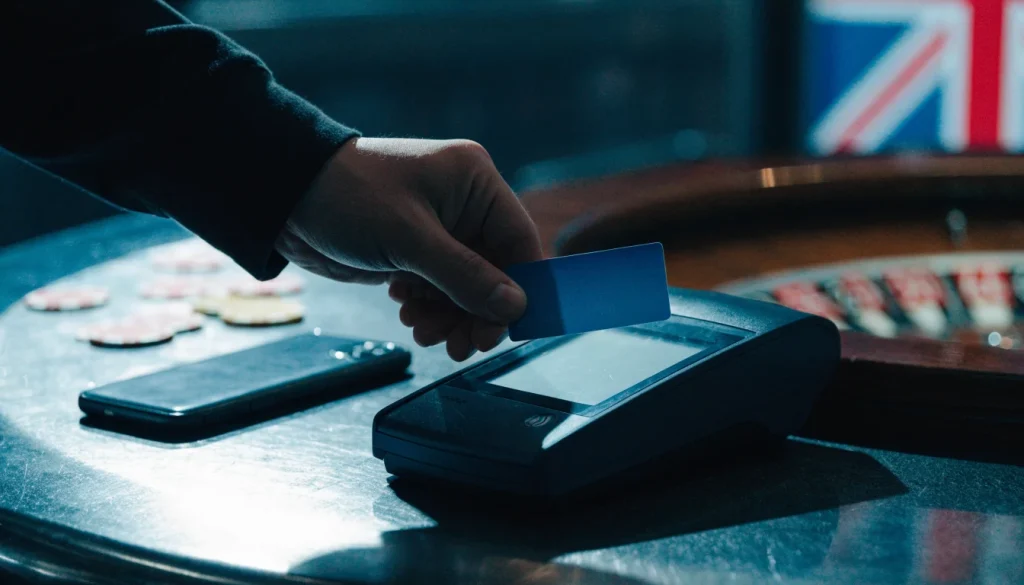
Debit-card availability varies by casino, and deposits may follow a different path from withdrawals.
Table of Contents
- How Debit Cards Fit Into UK Casino Payments
- Checking Whether a Casino Accepts a Particular Card
- What Makes a Debit-Card Deposit Suitable
- From Card Deposit to Casino Withdrawal
- Can a Debit Card Be Used for Online Gambling?
- Deposits, Alternatives and the Cost of Currency Conversion
- Why Card Withdrawals Can Take Longer Than Deposits
- Debit Cards and the Meaning of “Not on GamStop”
- Visa Debit Cards: Acceptance Is Not Universal
- Joining With a Debit Card: Keep the Payment Details Consistent
- The Pools Casino Payments: UK Banking Options & Cashouts
How Debit Cards Fit Into UK Casino Payments
Debit cards occupy a familiar place in the payment choices offered by UK casino sites. They connect a payment to money held in a bank account, rather than to a line of borrowing, and casinos commonly accept debit cards bearing the Visa or Mastercard name. That makes them a recognisable route for people looking at an online casino with debit card payments, though the broad pattern should not be mistaken for a promise that every card works at every site.
The distinction between debit and credit is more than a matter of terminology. A debit transaction draws on funds associated with the account; a credit transaction relies on borrowed money that must later be repaid. In ordinary shopping, the two kinds of card can look much alike. At a gambling cashier, however, the difference has a firm regulatory edge. UK-licensed casinos cannot accept credit-card payments for gambling.
The prohibition came into force on 14 April 2020, when the regulator banned credit-card gambling. It has not been relaxed. The rule reflects a judgement about the particular risks of borrowing to gamble: losses made with borrowed funds can remain after the gambling session has ended, while the debt continues to demand repayment. A card is not neutral simply because its plastic shape is familiar. Its source of funds matters.
When choosing a UK casino site that accepts debit cards, check the payment details that matter to you before signing up. This list provides a concise reference for considering the options.
1. EvoSpin
Payout speed: 1-3 business days
EvoSpin lists a payout speed of 1–3 business days.
2. x3bet
Payout speed: 1-3 business days
x3bet lists a payout speed of 1–3 business days.
3. Britsino
Payout speed: 1-3 business days
Britsino lists a payout speed of 1–3 business days.
4. WinBeast
Payout speed: 1-3 business days
WinBeast lists a payout speed of 1–3 business days.
5. Revery Play
Payout speed: 1-3 business days
Revery Play lists a payout speed of 1–3 business days.
6. SpinFormula
Payout speed: 1-3 business days
SpinFormula lists a payout speed of 1–3 business days.
7. SlotoSport
Payout speed: 1-3 business days
SlotoSport lists a payout speed of 1–3 business days.
8. NightWin
Payout speed: 1-3 business days
NightWin lists a payout speed of 1–3 business days.
9. Dieselwin
Payout speed: 1-3 business days
Dieselwin lists a payout speed of 1–3 business days.
10. BeOnBet
Payout speed: 1-3 business days
BeOnBet lists a payout speed of 1–3 business days.
This is why “card payments” is an imprecise phrase in the UK casino context. It may describe a payment option that is available for debit cards, while giving no permission to use a credit card. The word card alone does not settle the question. The important divide is between money drawn from an account and credit used to fund gambling.
A debit card can therefore appear in the same cashier as other payment choices without sharing their rules. UK casinos commonly accept debit cards, including Visa and Mastercard, but that statement is about a broad market practice, not universal acceptance. The UK market is shaped by both payment infrastructure and regulation: the method must fit the operator’s available arrangements, and it must not cross the line into prohibited credit-card payments.
The boundary also matters when a payment is routed indirectly. A credit card does not become an acceptable gambling payment merely because another service sits between the card and the casino. Remote gambling operators cannot accept credit-card payments for gambling through a money service business, and a wallet cannot be used where it allows credit-card funds to be used for gambling. The principle follows the money rather than the label on the final step.
That restriction sits within a wider system of local oversight. Remote gambling businesses serving customers in Great Britain must hold the relevant Gambling Commission licence, wherever they are based. In that regulated setting, payment rules are part of the conditions under which gambling is offered, not optional housekeeping adopted by individual casinos at whim. A legal online casino is expected to operate within those rules.
UK casino sites that accept EcoPayz (Payz) · Casinos That Accept Maestro in the UK: What to Check
The ordinary appeal of a debit card is partly its familiarity. It belongs to the same financial world as everyday bank spending, and its name is easily recognised beside casino payment options. Yet the ease of recognising a network logo should not be confused with certainty about an individual card or transaction. The general presence of debit-card payments says little about the details of a particular cashier; that distinction belongs to the site’s own payment information.
For the broader question of whether online debit card casinos in the UK exist, the answer is yes: debit cards are a common payment method at UK casinos. But the category has a clear boundary. Debit is not credit, and credit-card gambling remains banned at UK-licensed casinos. The distinction is simple. Its consequences are not.
Checking Whether a Casino Accepts a Particular Card
A casino can say that it accepts cards without confirming that every debit card will work. The word “card” is a broad label: it may refer to a payment network, while the card in someone’s wallet is a particular product issued under that network. A general statement therefore answers only part of the question. Current availability and the eligibility of the specific card need to be checked in the casino’s cashier.
Attention: A general statement that a casino accepts cards is not a guarantee that every specific debit card product will be eligible or work at the cashier.
This distinction matters in Britain, where Visa and Mastercard appear on casino payment pages but their presence is not a guarantee that every card bearing either name can be used. A specialist review may list both networks as supported, yet that listing cannot settle the current position for a particular casino or card product. Payment arrangements can change, and the cashier is the place where the operator presents the methods available for the account at that time.
The difference is less glamorous than a banner announcing “cards accepted”. It is also more useful.
What a general card claim leaves open
A site’s broad payment description may indicate that it supports card payments as a category. It does not necessarily establish that the cashier currently offers that route to every customer, or that every card under a named network is eligible. A logo on a promotional page is not the same thing as a live payment option.
That is why “casino sites that accept debit cards” is not quite a complete answer to the practical question. The meaningful detail is whether the selected casino currently displays a debit-card option and whether the card product can be selected and used within that process. The distinction is small in wording and large in consequence: one statement describes a general capability; the other concerns a particular transaction.
Casinos That Accept Debit Cards in the UK · Casinos That Accept USDC in the UK: Payment Checks
The same care applies to a site described as an online casino that accepts debit cards. The description may be accurate at a broad level and still leave the status of an individual card unresolved. A payment method can be listed in a review or on a general information page while the live cashier gives a more specific picture. Neither should be mistaken for a promise that every card will pass.
Where to confirm current availability
The cashier is the practical reference point because it shows the payment methods the operator is making available for the account. Its card section can be checked for the network or payment option shown, and the payment instructions can be read for any stated eligibility conditions. If the cashier does not display a card option, a general claim elsewhere on the site does not make that option available at that moment.
A careful check separates three things that are often collapsed into one: whether card payments are mentioned at all; whether the cashier currently presents a card route; and whether the particular card product is eligible under the displayed terms. A “yes” to the first does not automatically answer the other two.
This does not mean that every casino publishes a complete explanation of every card product it can accept. The point is narrower: broad listings should be treated as a starting indication, not as confirmation. Where the cashier’s wording is unclear, the operator’s payment information or customer support can clarify what the displayed option covers. That is a more reliable basis than assuming that a network logo settles the matter.
Do
- Check the live cashier for current availability
- Read specific eligibility conditions in the payment instructions
- Confirm the option with customer support if wording is unclear
Don’t
- Assume a network logo guarantees card acceptance
- Treat a promotional page logo as a live payment option
- Rely on general review listings as a final confirmation
Reading payment information without overreading it
The language on payment pages can be compressed. “Visa” or “Mastercard” may identify the network, not spell out the eligibility of each card associated with it. “Cards accepted” can be even less specific. Neither phrase should be expanded in the mind into “all debit cards accepted”. The wording says what it says, not what would make the decision easier.
It is also worth distinguishing a site’s general payment list from the cashier attached to the account. A review may describe an operator’s payment facilities, but it cannot stand in for a live check of current UK availability. A casino’s own page may be more directly relevant, though even there the cashier is the operative point: it shows the options presented for a deposit rather than merely describing the operator’s broad payment range.
For anyone comparing casinos that accept debit cards, this makes a short verification more valuable than a long list of logos. The useful question is not simply whether a site has ever supported cards, but whether its current cashier offers the relevant card route and identifies any conditions attached to it. A site’s overall reputation, presentation or payment branding cannot answer that specific question.
There is no need to infer acceptance from a successful-looking symbol or from the fact that another card on the same network works elsewhere. Each operator’s cashier presents its own available methods, and the stated eligibility belongs to that operator’s payment arrangement. In this market, “card accepted” is a category, not a universal guarantee.
Casino Sites That Accept Jeton in the UK: How It Works
The check is modest: inspect the current cashier, read the wording attached to the card option, and avoid treating a generic listing as confirmation for a particular product. That keeps the decision anchored to what the casino is actually offering, rather than to a label that may cover less than it appears to.
What Makes a Debit-Card Deposit Suitable
A card can be accepted and still be a poor fit for a particular deposit. Suitability is less a matter of finding a casino with the grandest payment logo display than of understanding the conditions attached to the transaction: the minimum accepted, the ceiling imposed, and whether using that route changes the terms of an offer. These details are easy to overlook because the payment button appears at the end of a decision, when attention has already moved to the game.
The minimum deposit is the first practical boundary. A specialist review gives a range of £10–£20 for minimum deposits, with the amount depending on the chosen payment method. That is a reported guide, not a figure that should be assumed to apply to every casino or every card. The cashier’s stated minimum for the selected route is the operative one. A site may set different entry points for different payment methods, and the amount shown before confirmation matters more than a general description elsewhere on the site.
Minimum deposit amounts are not recommendations but the smallest transactions an operator is prepared to accept through a specific route.
A minimum is not a recommendation. It is simply the smallest transaction the operator is prepared to accept through that route. If it exceeds the amount someone intended to deposit, the payment method may not suit that purpose, even where the card itself is supported. The distinction is modest but important: acceptance answers whether a transaction can be attempted; the minimum answers whether it can be attempted on the intended terms.
The upper boundary deserves equal attention. A specialist review notes that maximum deposit limits can apply per transaction, per day or per month, and may vary according to payment method and account status. These limits are not interchangeable. A transaction ceiling governs one payment; a daily or monthly cap governs the total over a period. A card deposit that falls within one limit may still be blocked by another if earlier payments have already counted towards it.
Account status can also affect what is available. A payment limit displayed to one customer should not automatically be treated as universal, and a figure shown in a general guide may not reflect the cashier’s current settings. The useful comparison is therefore not between headline claims but between the conditions attached to the selected method at the point of deposit. A maximum matters most when it constrains a planned payment; a large theoretical ceiling has little value if it is irrelevant to the amount being considered.
Casinos That Accept Wirecard in the UK: What to Check
There is a quieter question beneath these figures: what does the payment method do to the rest of the transaction? Payment terms can sit beside promotional terms. A specialist review has reported that PayPal may be excluded from bonus eligibility, while other accounts of casino promotions note that Skrill and Neteller can also be excluded. Those are reports about changing offers, not a stable rule for every operator. The offer’s own terms must say whether a deposit through a particular method qualifies.
This is one reason a promotion should not be treated as a simple addition to a deposit. The payment route and the offer may be linked by conditions that alter eligibility. A method can be technically available while a deposit made through it does not count towards a bonus. That distinction belongs in the calculation of suitability, not in the small print after the payment has been made. A bonus that depends on a particular route may be less useful than a straightforward deposit with clear conditions.
The comparison is therefore not a contest for a universal “best” card casino. There is no single minimum, maximum or promotional condition that makes one site suitable for every account and every intended payment. A useful assessment begins with the amount the customer plans to deposit, then checks the cashier’s minimum and relevant limits, followed by the payment-specific terms attached to any offer. Those are separate questions, even when the page presents them together.
The word “limit” can also mean two different things in a casino account. A deposit cap set by the operator governs what the cashier will accept. A financial limit chosen by a customer governs personal account activity. The two should not be confused: one is a transaction condition, the other a control over spending. Both shape how a deposit fits into an account, but they serve different purposes.
Suitability Criteria
A debit-card deposit is suitable only when its minimum, maximum, and promotional restrictions match the intended transaction.
Conditions, not slogans. A debit-card deposit is suitable when its stated minimum, applicable maximum and any offer restrictions match the intended transaction. A general claim that a casino accepts cards cannot establish those details. The cashier and the relevant terms are where the practical answer resides.
From Card Deposit to Casino Withdrawal
A debit-card deposit and a casino withdrawal are two separate transactions, even when they appear on the same account statement. Money going in may reach a casino balance promptly; money coming out has to pass through the operator’s withdrawal process and then travel back through a payment route. The shared card does not make the journeys identical.
A specialist review describes a possible contrast: a card deposit may be instant, while a payout can take several business days. That is an account of a reported payment experience, not a promise about every casino or card. The useful distinction is between a deposit being credited and a withdrawal being completed. The first concerns money entering the gambling account; the second concerns funds leaving it and reaching the account holder.
Once a withdrawal is requested, the casino has to identify the balance being withdrawn and process the payment. The amount shown in the casino account is not yet money received in the bank account. A pending request, an approved withdrawal and a completed transfer describe different stages, and a cashier or transaction history may use its own labels for them. Reading those labels carefully prevents a common misunderstanding: a balance can fall without the corresponding funds having arrived at the card account.
Casinos That Accept Bitcoin in the UK: Payment Guide
There is also a reason a casino may not simply send winnings wherever is most convenient. UK anti-money laundering rules generally require payouts to return to the original payment source. In practice, that means the route used to put money in can shape the route used to take money out. It is a control on the movement of funds, not a feature designed to make a withdrawal feel immediate.
This closed-loop approach helps connect a payment into a gambling account with the later payment out. It can also mean that a withdrawal is not treated as an unrestricted transfer to any destination chosen at the last moment. Where an original source cannot receive a payment, the operator may have to deal with the situation under its own procedures and applicable controls. The precise route should therefore be understood as part of the casino’s payment terms, rather than inferred from the fact that a card was accepted for a deposit.
The transaction path can be pictured as a sequence: a card payment reaches the casino, funds appear in the account, a withdrawal is requested, and the payout is directed back towards the original source. Each stage has a different status. A successful deposit confirms only that the initial payment was accepted; it says nothing on its own about how a later withdrawal will be routed or when it will arrive.
Withdrawal Sequence
Step 1: Request
The user requests a withdrawal of the balance held within the operator’s system.
Step 2: Processing
The casino identifies the balance and processes the payment through internal reviews.
Step 3: Routing
The payout is directed back towards the original payment source to comply with anti-money laundering rules.
This distinction matters particularly when a casino account is viewed as though it were an ordinary bank account. It is not. The balance is held within the operator’s system, and a withdrawal is a separate instruction to release funds through a payment channel. That instruction remains subject to the operator’s handling of the transaction and the requirement to return funds to their source. A figure displayed as available for withdrawal is not the same thing as a completed bank credit.
The card statement may not make every stage obvious. A deposit and a withdrawal can appear as separate entries, and the wording used by the casino, card issuer or bank may differ. The casino’s transaction record can help establish whether a request is still being handled or has been sent onward, while the bank or card account shows whether the funds have arrived. Those records describe different sides of the same movement.
The important point is not that every payout follows an identical timetable. It does not. A specialist review’s account of a deposit arriving instantly and a payout taking several business days illustrates why the two should not be treated as mirror transactions. The deposit has already been authorised and credited; the withdrawal must move through a distinct process, with the original source shaping where it goes.
The original card is therefore more than the entry point. It can remain part of the route out, because anti-money laundering controls commonly link a payout to the source of the funds. A quick deposit is one completed step. A withdrawal is another, and it has its own path.
Casinos That Accept InstaDebit in the UK
Can a Debit Card Be Used for Online Gambling?
Yes. A debit card can be used to deposit at an online casino when the casino accepts that card and the payment is made from money available in the linked account. Debit cards are commonly accepted at UK casinos, but that does not make every card or casino combination eligible.
The distinction from a credit card is not a matter of wording. A debit payment draws on funds in a bank account; a credit-card payment borrows against a line of credit. In the UK, the regulator’s ban on credit-card payments for gambling took effect on 14 April 2020 and remains in force. Remote gambling licensees cannot take those payments, including credit-card funding routed through a money service business. Nor can they accept a wallet payment where the wallet permits credit-card funds to be used for gambling.
The rule reflects a particular view of risk: gambling should not be financed by borrowing. It does not mean that every debit-card deposit will go through. The casino must support the payment route, and its checks and the card issuer’s controls may affect whether a transaction succeeds. That is a question of payment acceptance, not a change in the legal distinction between debit and credit.
Legality also depends on the operator, not just the card. Remote gambling licensees serving Great Britain must hold the relevant UK Gambling Commission licence, and online gambling is legal for adults aged 18 and over at licensed sites. A debit card does not make an unlicensed casino lawful, any more than a credit card would make a prohibited payment acceptable.
Credit Card Ban
UK-licensed casinos are prohibited from accepting credit-card payments for gambling, including those routed through wallets or money service businesses.
There is a separate pause before the first deposit. UKGC rules require a remote operator to prompt a new customer to set a financial limit before accepting that first payment. The account must also provide accessible controls for setting or changing limits. These controls put a boundary around spending at account level; they do not determine whether a particular card is supported.
So, a debit card may be used for online gambling in the UK when the casino accepts it and the operator is properly licensed. Credit-card payments for gambling are not an alternative route. The difference is deliberate.
Deposits, Alternatives and the Cost of Currency Conversion
Debit cards are not the only route into a casino account. Bank transfer and open banking are alternatives, and a specialist review describes them as offering instant deposits at many sites. That is a report about the services it covered, not a promise that every bank or casino will handle a payment in the same way.
Other options may appear in a cashier, but their functions differ. Paysafecard is deposit-only, so it is not a route for receiving a withdrawal. Some UKGC-licensed casinos also accept Apple Pay for deposits. The available methods are best treated as a property of the particular account and cashier, rather than a fixed menu shared across the market.
Casinos That Accept iDEAL in the UK: Payment Checks
Currency deserves attention before the first transaction. A specialist review reports GBP support on the pages it examined, but the account currency still needs confirming before money is moved. If the casino account is held in a different currency from the bank account or payment method, conversion may occur. The displayed deposit amount can then differ from the amount ultimately charged.
The cost is not necessarily printed as a separate casino fee. Charges may come from the casino, payment provider, card issuer or bank, while exchange-rate spread and network fees can also affect the total. A currency conversion spread may cost more than a visible flat charge; the comparison depends on the actual amount and the rates applied. There is no single payment route that can be called cheapest without checking those elements together.
A sensible comparison is therefore not just between the buttons in the cashier. It is between the amount entered, the account currency, the rate used and any fees disclosed by the casino or financial provider. A method that looks free at the point of deposit can still carry a conversion cost elsewhere in the chain.
The cashier is only half the arithmetic.
Why Card Withdrawals Can Take Longer Than Deposits
A debit-card deposit can be authorised almost at once, while a withdrawal has to pass through a different set of checks. The casino may first review the request internally, then release it for processing by the payment provider. A quick payment into an account therefore says little about how quickly money will come back out.
Why first withdrawals take longer
Initial withdrawals often require the completion of KYC (Know Your Customer) checks. The operator must confirm the user’s identity or review account information before the payment can be approved.
The first withdrawal can take longer because KYC may still be incomplete. The operator may need to confirm identity or review account information before approving the payment. If documents are missing or need clarification, the request can remain pending while those checks are resolved. Later withdrawals may avoid some of that initial work, but approval still depends on the casino and the state of the account.
There is a distinction between the casino’s approval time and the time taken by the payment route after release. A withdrawal status marked as approved does not necessarily mean the funds have arrived. The provider and the bank may still need to process the transfer, and their handling times can differ.
A specialist review may identify PayPal, open banking services and debit cards connected to fast payout systems as among the quicker withdrawal options. That is a broad comparison, not a promise for every account or transaction: the operator’s processing stage still matters, and the available route depends on its cashier.
For someone who plays slots with a debit card, the practical point is that the speed of the original card payment is not a reliable guide to payout timing. Withdrawal information should distinguish between the casino’s review and the subsequent transfer, rather than compressing both into a single “fast” label. The relevant detail is the time stated for the particular method, alongside any verification requirements.
A pending request is not automatically a failed payment. It may simply be waiting for internal approval or account checks; if the stated processing period has passed, the casino’s support team can clarify whether it has been released or remains under review.
Upaycard at UK Casinos: How to Check Availability
Different stages. Different clocks.
Debit Cards and the Meaning of “Not on GamStop”
A debit-card logo in a cashier answers a narrow question: whether that payment route is offered. It says nothing, by itself, about a casino’s licence or its connection to GamStop. Payment access and regulatory status belong to different parts of the arrangement, even when advertising makes them look like one convenient package.
“Not on GamStop” describes a relationship to the UK’s self-exclusion scheme, not a payment feature. A casino may promote card deposits while operating outside the UK Gambling Commission’s regulatory system. Conversely, a debit-card option at a UK-licensed casino does not mean that self-exclusion safeguards are absent. The card is not a licence, and it is not evidence of one.
For customers in Great Britain, remote gambling licensees serving the market must hold the relevant UKGC licence. Online gambling is legal in the UK only through licensed and regulated sites. Offshore casinos without a UKGC licence sit outside that system; a familiar payment method does not bring them inside it. That distinction matters more than the smoothness of a deposit screen.
Nor should non-GamStop access be treated as a route around a decision to self-exclude. UKGC-licensed casinos must provide responsible-gambling tools, including self-exclusion, alongside account-level controls. Seeking another site specifically to defeat an existing exclusion can turn a protective measure into a temporary obstacle, rather than addressing the reason it was put in place. A card payment cannot settle that conflict.
Attention: The availability of a debit-card option is not evidence of a UKGC licence or a casino’s relationship with GamStop.
The phrase can therefore describe very different circumstances, and the wording alone is not enough to establish which applies. The operator’s regulatory status is the central question; the availability of Visa or Mastercard is secondary. In Britain, a legal casino serving local customers needs a current UKGC operating licence. Checking the public register is more informative than relying on a payment badge or a promotional label.
A cashier shows a route for money. It does not tell the whole story about who is taking it, under which rules, or what protections apply. The distinction is plain. The consequences are not.
Visa Debit Cards: Acceptance Is Not Universal
A casino’s payment page may display the Visa logo, but that is evidence of network support, not a promise that every Visa debit card will be accepted. The distinction matters because “Visa” covers a payment network, while the card in a person’s wallet is issued under particular product and account conditions. A logo cannot settle those details.
A specialist review may list Visa among a casino’s payment options, but such a listing can become outdated and cannot confirm eligibility for a specific card. For UK availability, the cashier is the useful point of reference: its current payment options show what the operator is offering, while the deposit screen can reveal whether the selected card is accepted. Even then, a listed method does not guarantee that an individual transaction will succeed.
That uncertainty is not unique to Visa. Payment systems are assembled from networks, card issuers and the casino’s own processing arrangements; the familiar mark on the card is only one part of the chain. A Visa debit card may therefore be suitable at one site and unavailable at another, or a product may not fit the operator’s supported range.
Casinos That Accept Tether in the UK: Payment Checks
For anyone comparing Visa debit card casinos in the UK, the practical distinction is between a general claim of Visa support and confirmation in the live cashier. The former describes a method in broad terms. The latter is the relevant check for the account and card being used. Small print, large consequences.
Joining With a Debit Card: Keep the Payment Details Consistent
A casino may offer debit-card deposits, but the payment is still tied to an account holder. The details entered when opening the gambling account and those attached to the card should belong to the same person. Matching ownership information reduces the chance that a straightforward payment is held up by questions about whose money is being used.
This is a small administrative principle with a larger purpose. Payment controls are designed to make funds traceable, not merely to move them from one screen to another. A card in one person’s name used through an account registered to someone else can make that trail harder to establish. Consistency does not guarantee that a transaction will be accepted, but it avoids a basic mismatch that may create unnecessary friction.
Online Casinos That Accept SMS Deposits: How It Works
The same logic often shapes what happens when funds are returned. Anti-fraud and anti-money-laundering controls commonly direct a payout back to the original payment source. That closed-loop approach links the outgoing money to the route by which it arrived, rather than treating every account as interchangeable.
If the original source cannot be used, an alternative route may involve further checks. That is not necessarily a sign that something has gone wrong; it can be part of confirming that the person receiving the funds is entitled to them. Keeping the account and payment route under one customer’s ownership makes the chain easier to follow.
For someone choosing a casino to join with a debit card, the useful distinction is therefore not just whether a card button appears in the cashier. The account and the card should form a coherent payment record. A plain rule, with practical consequences.
Are Visa and Mastercard deposits definitely debit cards?
No. UK casinos commonly accept Visa and Mastercard debit cards, but a network logo does not guarantee that every card product is eligible; check the cashier for the specific card.
Why must withdrawals return to the deposit method?
Returning funds to the original payment source is a common anti-fraud and anti-money-laundering control. An alternative payout route may require additional verification.
Can I deposit in GBP?
Yes, GBP is supported. Confirm that your account is set to GBP before depositing to avoid currency conversion.
Which payment methods are accepted in Great Britain?
Common options include Visa and Mastercard debit cards, bank transfers and e-wallets such as PayPal, Skrill and Neteller. Some UK-licensed casinos also offer Open Banking, Paysafecard, Apple Pay or Jeton; check the cashier for current availability.
What is the current minimum deposit?
The minimum usually starts at £10–£20, depending on the payment method.
Is Skrill available?
Yes, Skrill is available at some UK-friendly casino sites and remains a common deposit option. It is often excluded from promotions.
Which method has the lowest fees?
There is no universally cheapest method. Compare the casino and provider charges, any bank or issuer fees, currency-conversion spread and network costs for the amount you plan to deposit or withdraw.
What is the fastest withdrawal method for UK casinos?
PayPal, Open Banking services and debit cards linked to fast payout systems are generally among the quickest. The actual time also depends on casino approval and whether your account is fully verified.
The Pools Casino Payments: UK Banking Options & Cashouts

Anonymous Crypto Casinos in the UK: What to Know
A practical look at Bitcoin payments, bonus conditions and the limits of anonymity at casinos...

BNB casino comparison in the UK: what to verify
The comparison sets out the UK licensing boundary and the limits of claims about crypto...

Bitcoin Cash Casino Comparison for UK Players
Bitcoin Cash is a payment method, not a separate regulatory category; the key distinction is...

Cardano ADA Casinos in the UK: Licensing Explained
UK rules prohibit licensed operators from accepting cryptocurrency, while the available evidence does not verify...

UK casino credit card deposits: what the rules allow
The key distinction is whether a card uses bank-account funds or borrowed credit, with cashier...

UK casino sites that accept EcoPayz (Payz)
EcoPayz and Payz refer to the same service, but availability and payment conditions can vary...

Casino Sites That Accept Jeton in the UK: How It Works
Jeton availability can vary by casino and account, so a listed method does not guarantee...

UK Skrill Casino Sites: What to Check in 2026
Skrill can offer a familiar deposit route, but availability, minimums, withdrawals and bonus terms depend...

Casinos That Accept Apple Pay UK: Evidence Limits
Apple Pay is a checkout option, while Boku routes deposits to a mobile account; evidence...

Casinos That Accept AstroPay in the UK
AstroPay availability is only one part of the decision: cashier checks, conversion, fees and withdrawal...

Casinos That Accept Bank Cheques in the UK
Boku is a Pay by Phone service, so its casino deposits use mobile billing rather...

Casinos That Accept Bank Transfers in the UK
Learn how Boku deposits differ from bank transfers, where they appear in casino cashiers, and...

Casinos That Accept Bitcoin in the UK: Payment Guide
A clear look at coin names, casino payment menus and why deposit options do not...

Casinos That Accept Boku in the UK in 2026
Boku can fund casino play, but an accepted deposit may not qualify for a promotion,...

CashtoCode Casinos UK: How to Check Payment Support
A payment label alone does not confirm cashier availability, bonus eligibility, game access or whether...

Casinos That Accept Citadel in the UK: What to Check
Citadel availability can vary by customer, and a displayed deposit option does not establish the...

Click2Pay at UK Casinos: What Can Be Verified
A cashier option, a qualifying deposit and a withdrawal route are separate checks; Click2Pay acceptance...

Casinos That Accept ClickandBuy in the UK
A payment method appearing on a casino page does not establish bonus eligibility or confirm...

Casinos That Accept Debit Cards in the UK
See how card deposits, withdrawals, limits and payment costs differ, and what to check before...

Casinos That Accept Diners Club in the UK
A slot lobby, a payment logo and a bonus condition answer different questions about whether...

Casinos That Accept Dogecoin in the UK: Payment Checks
A site’s general crypto claims may not match the methods shown in an account’s cashier...

Casinos That Accept E-Checks in the UK
An e-check is a real option only when it appears in the UK account cashier,...

Casinos That Accept E-Cheques in the UK: What to Check
E-cheque labels do not guarantee a standard option, so availability, deposit limits and withdrawal routes...

Entropay at UK Casinos: Checking Current Availability
Entropay references can reflect older guides or branding, while usable payment options depend on an...

Casinos That Accept Ethereum in the UK: Payments
Ethereum availability can vary by account, location and transaction, so a crypto logo alone does...

Casinos That Accept E-Wallets in the UK
Payment availability, deposit and withdrawal rules, fees, currency and timing can differ even when a...

Casinos That Accept Giropay in the UK: What to Check
A Giropay label concerns a transaction, not slot availability, promotion eligibility or the terms for...

Casinos that accept Google Pay in the UK
Availability depends on the casino’s cashier, while deposit limits, card eligibility and withdrawal routes can...

Casinos That Accept iDEAL in the UK: Payment Checks
An iDEAL cashier option does not guarantee that a casino promotion applies; payment routes and...

Casinos That Accept InstaDebit in the UK
InstaDebit availability, bonus eligibility, withdrawals and UK payment rules are separate checks, not guarantees tied...

Casinos That Accept Interac in the UK: Payment Guide
Interac availability, bonus eligibility and withdrawal rules are separate issues, so each needs checking before...

Casinos That Accept Klarna in the UK: What to Check
Klarna funding claims, slot catalogues, bonus terms and withdrawals are separate questions, each requiring its...

Casinos That Accept Litecoin in the UK: What to Check
A practical look at Litecoin availability, payment routes, withdrawal conditions and the rules that still...

Casinos That Accept Maestro in the UK: What to Check
Maestro acceptance can vary by casino, and a successful deposit does not guarantee bonus eligibility...

Casinos That Accept Mastercard in the UK
UK-licensed casinos can accept Mastercard debit cards, but credit-card gambling deposits are banned and card...

Casinos That Accept MiFinity UK: Payment Checks
A casino’s game selection does not confirm that MiFinity is available for a particular account...

Casinos that accept Monzo in the UK
Game listings and general payment wording do not establish whether a specific casino accepts Monzo....

UK Casinos That Accept MuchBetter: How to Check
The cashier confirms whether MuchBetter is available, while withdrawal timing, bonuses and payout routes remain...

Casinos that accept Neosurf in the UK: payment guide
A payment option describes how funds may be added, but game availability and bonus eligibility...

Casinos That Accept Neteller in the UK
Neteller availability, bonus eligibility and withdrawal routes are separate considerations, so cashier options alone do...

Casinos That Accept Pay N Play in the UK
Boku routes a casino deposit to a monthly mobile bill or prepaid phone credit; it...

Casinos That Accept PayPal in the UK: Payment Guide
PayPal is a digital wallet, while Boku is a phone-billed payment service; cashier listings and...

Casinos That Accept POLi in the UK: What to Check
Promotion wording, cashier options and withdrawal routes can differ, so payment support needs to be...

Casinos That Accept Revolut in the UK: Payment Guide
A Revolut payment may be accepted without qualifying for a promotion, and the cashier terms...

Casinos That Accept Ripple XRP in the UK
A listed cryptocurrency may not be selectable for a UK account, and deposits, bonuses, withdrawals...

Casinos That Accept Siru Mobile in the UK
Siru availability is narrowly evidenced, while mobile deposit limits and withdrawal rules depend on the...

Casinos That Accept Solana in the UK: What’s Known
A Solana mention alone does not confirm a working UK deposit route; evidence must establish...

Casinos That Accept Tether in the UK: Payment Checks
Tether availability can vary by account, while network support, withdrawal terms, fees and verification affect...

UKash Casinos in the UK: Checking Payment Availability
A UKash mention does not confirm that a voucher or casino transaction is currently available,...

Upaycard at UK Casinos: How to Check Availability
Payment listings do not confirm game access, promotion eligibility, withdrawal support or the terms attached...

Casinos That Accept USDC in the UK: Payment Checks
USDC availability, bonus eligibility and withdrawal rules are separate questions, so payment pages and account...

Casinos That Accept Visa in the UK: How It Works
Visa funds the account rather than choosing the games, while acceptance, deposit limits and withdrawal...

WebMoney Casinos in the UK: What Payment Details Show
The payment information here concerns Boku, so it cannot confirm WebMoney availability or establish a...

Casinos That Accept Wire Transfers in the UK
Bank-linked cashier options can use different payment routes, with distinct steps for deposits, withdrawals and...

Casinos That Accept Wirecard in the UK: What to Check
Wirecard availability, bonus conditions and withdrawal handling are separate checks, so a payment option alone...

Casinos That Accept Zimpler in the UK: What to Check
Zimpler availability, bonus terms and game access are separate questions, so operator claims need checking...

Instant Bank Transfer Casinos in the UK: What to Check
Bank transfer availability and timing depend on the operator’s arrangements and the options shown in...

iPad Casinos UK: Browser Access, Payments and Play
This overview explains browser access on an iPad and covers payment conditions, app claims, account...

Mobile top-up casino UK: how phone payments work
A mobile top-up is charged to a phone account or prepaid credit, rather than simply...

Online Casinos That Accept SMS Deposits: How It Works
A Boku payment needs an SMS verification code, while small limits, network rules and no...

Pay by mobile casinos in the UK: how deposits work
Mobile play describes the device, while pay by phone describes deposits; the distinction affects cashier...

Pay by Phone Bill at UK Casinos: How It Works
The guide explains SMS authorisation, Payforit’s place in the cashier, and why a fast deposit...

Pay by Phone Casinos UK: How Deposits Work
Payforit links a casino deposit to a mobile number, with the charge settled through a...

Payforit Mobile Casinos in the UK: How Payments Work
See how Payforit fits into casino cashiers, how deposits can become phone-bill charges, and what...

Casinos That Accept Direct Banking in the UK
Open Banking links a casino payment to a bank account, while cashier labels, payout timing...

TRON (TRX) Casino Comparison in the UK
The guide explains the UK licensing boundary and what can—and cannot—be established about TRX deposits,...

UK Crypto Casinos Without KYC: Rules and BCH
The UK regulatory distinction shapes how offshore BCH casinos, payment claims and no-KYC sign-up should...